Acanthamoeba is a microscopic, free-living ameba, or amoeba* (single-celled living organism), that can cause rare**, but severe infections of the eye, skin, and central nervous system. The ameba is found worldwide in the environment in water and soil. The ameba can be spread to the eyes through contact lens use, cuts, or skin wounds or by being inhaled into the lungs. Most people will be exposed to Acanthamoeba during their lifetime, but very few will become sick from this exposure. The three diseases caused by Acanthamoeba are:
Acanthamoeba keratitis – An infection of the eye that typically occurs in healthy persons and can result in permanent visual impairment or blindness.
Granulomatous Amebic Encephalitis (GAE) – A serious infection of the brain and spinal cord that typically occurs in persons with a compromised immune system.
Disseminated infection – A widespread infection that can affect the skin, sinuses, lungs, and other organs independently or in combination. It is also more common in persons with a compromised immune system.
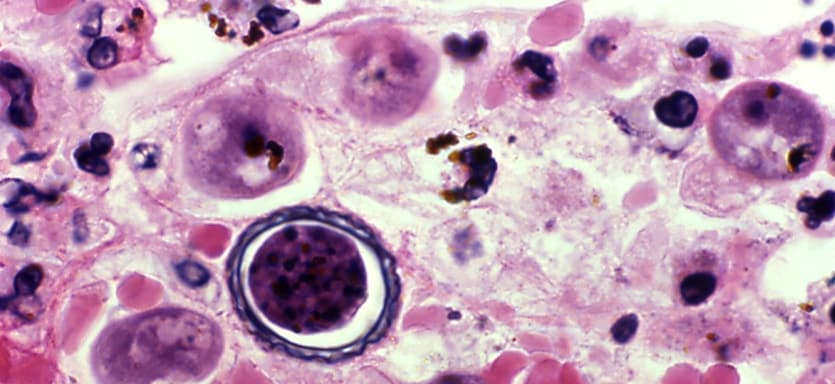
Image: This photomicrograph depicted a magnified view of brain tissue within which was a centrally located Acanthamoeba sp. cyst. Credit: DPDx
You request link is locked